
Teaching Tip # 1
Level: (Beginners to Advanced)
Time Required: 50 minutes
Purpose: Fun with the language is the main purpose of this activity that can help students use the language which is the sole purpose of learning. Students can learn every day expressions, how to open or close a conversation, how to ask for something or talk about some scenario. Teacher can teach from simple words to complex idioms, phrases for each scenario. This would be like connecting the real world to the classroom. Students can gain confidence and awareness about a variety of real life situations.
Preparation and Material:
- Make two cardboard cut outs (A girl & a boy).
- Make speech bubble cards based on words, phrases, common expressions, idioms to be used according to chosen situation (per pupil).
Procedure:
- Teacher can pick any situation and create vocabulary cards based on common and popular expressions to be used in that scenario.
- Teacher explains the situation and required vocabulary to students in the beginning, then distribute speech bubble cards amongst students for them to keep and use later.
- Have students practice in pairs; then after allotted time ask students to come in front of the class and stand behind the card board cut outs to converse with the character chosen for that situation and talk by using the learned words/phrases.
- Teacher has to stand behind the other character cutout to have a conversation with each pupil.
Variation:
- In the above case, the teacher has taught the conversation needed on speaker’s part only. This activity can be expanded and the language of the other character can be provided too. In that case two students can converse about that certain topic. (Optional)
- Students can have fun and record their conversations online (optional).
- For beginners, limit the vocabulary to a few and simple words or phrases only. This activity can be used to teach from simple words to difficult idioms, synonyms, antonyms, and parts of speech. (Depending on the requirement of the student). Teacher can explain words being used are adjectives or verbs etc.
- It can be used to correct any errors being made by students. Teacher can develop an imaginary conversation around that error and have students practice in a fun way.
Sample Activity

- In this scenario, students are going to learn how to talk with a hair dresser.
- Using cardboard cutouts, ask students to stand behind one of them and talk to the hairdresser at a salon.
- Teacher will stand behind the other cutout.
- Students will use speech bubble cards to practice conversation (after teacher has already explained how to use different common expressions).
- In the first place, they are not supposed to look at the cards while conversing but in case of need they can.
- Speech bubble Card 1: Intro
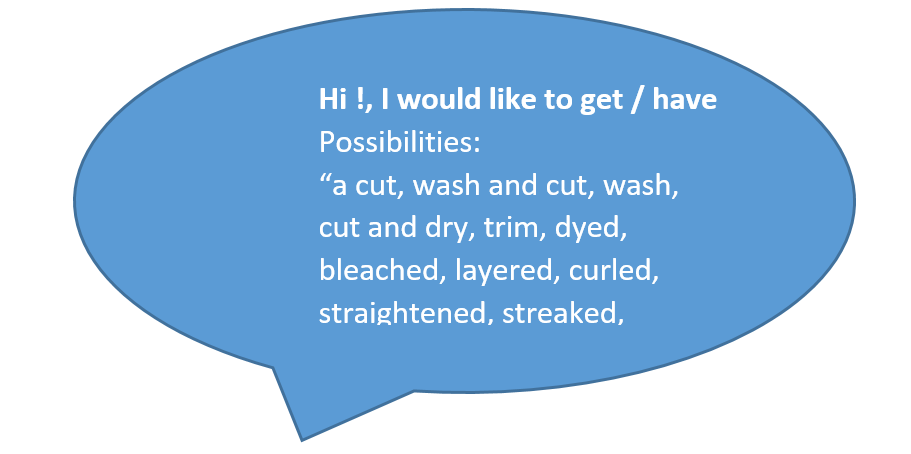
- Speech bubble Card 2: Whatever the student desires to get done

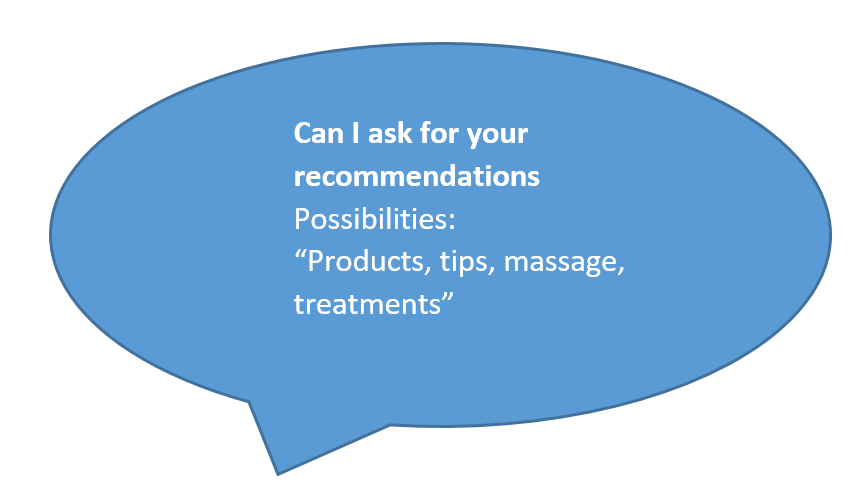
- Speech bubble Card 3: Can ask for further advice by using these words

- Speech bubble Card 4: Asking for any other suggestions
- Speech bubble Card 5: Closing conversation

Teaching Tip # 2
Level: (Beginners to Advanced)
Time Required: 50 minutes
Fun Dictation Activity!
Time: 30-45 mins (depends on the age and level of students in addition to the number of words that the teacher decides to test, can range from 10-20 or more)
Material required:
Alphabetical cards (spelling based)
Paper tape and worksheet
Bell
Light music(optional)
Purpose: Game like concept makes This activity good to review newly learned vocabulary. It can be used weekly, monthly or end of semester to review vocabulary in an interesting and challenging manner. Before the actual activity takes place teacher has to provide the list of the words to be tested and memorized. teacher just facilitates and monitors while students perform.
Set up timed competition to challenge and motivate students. The group that finishes first rings the bell on the teacher table to declare that they have owned the “master of vocabulary” designation for the week or month. However, the Other groups are supposed to complete the task.
Preparation: Teacher has to print and cut the spellings of the words being tested. Teacher can make 4-6 sets for 4-6 groups and bag them in 4-6 bags.
Procedure: Ask students to get into groups (lower level and higher level combined) of four and assign each group a spelling bag along with tape and worksheet to organize the jumbled letters to make words.
While searching students will discuss and decide order of the letters to form an appropriate word from the lesson.
Variation: Depending on the time left and age of students they can be asked to make sentences with the same words, or categorize them which part of speech the word originally belongs. Or give synonym or antonyms for the same word.

